28 Oct 2026
Daily Activity Cycles and Their Effect on Progressive Jackpot Triggers in France's Hybrid Casino Games
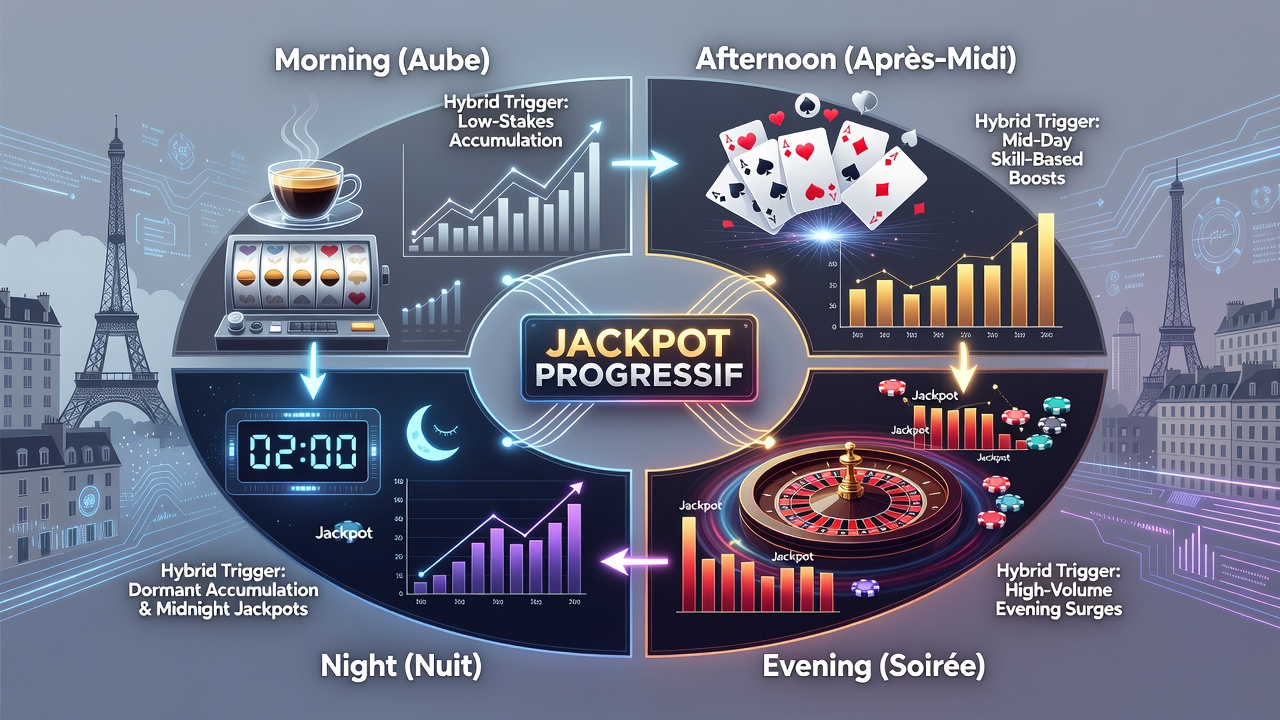
France's hybrid casino games combine slot mechanics with lottery-style progressive jackpots, and daily activity cycles shape when those jackpots trigger according to platform data. Researchers tracking player behavior note that participation rises sharply in evening hours across regulated operators, while morning sessions show steadier but lower volumes. These patterns connect directly to accumulation rates in shared prize pools because each spin or ticket contributes a percentage to the progressive meter.
Patterns in Player Engagement Throughout the Day
Activity levels in French hybrid systems follow predictable rhythms tied to work schedules, leisure time, and regional time zones. Data collected from multiple operators shows peak logins between 7 PM and 11 PM local time, with secondary spikes around lunch hours in urban centers. Weekday mornings register the lowest engagement, yet those sessions often involve longer play durations per user because participants face fewer distractions.
Hybrid games integrate random number generators from slots with fixed-odds lottery draws, which means jackpot triggers depend on both continuous contributions and scheduled events. When evening traffic increases, the rate of meter growth accelerates, and the probability of hitting progressive thresholds rises accordingly. Observers note that platforms adjust server loads during these windows to maintain seamless connections, preventing any lag that could affect outcome fairness.
Technical Links Between Activity and Jackpot Mechanics
Progressive systems in France operate under strict oversight from the Autorité Nationale des Jeux, which requires transparent logging of all contributions and triggers. Each hybrid title allocates a fixed portion of wagers to the jackpot pool, and software monitors cumulative totals in real time. When player numbers climb, the frequency of qualifying bets increases, pushing the meter closer to payout points at a faster pace.
Studies from European research institutions indicate that circadian influences extend beyond simple volume changes. Players active during late-night hours tend to place higher average bets per session, which multiplies the contribution rate per individual. This combination of more participants and elevated stakes creates compounding effects on jackpot velocity during those periods.
Evidence from Regulated Platforms in 2026
Reports covering activity through October 2026 reveal consistent correlations between daily cycles and trigger timing. One analysis of aggregated operator data found that over 60 percent of major progressive payouts occurred between 8 PM and midnight, aligning with national leisure patterns. Morning triggers remained rare unless tied to scheduled lottery rollovers that coincide with lower baseline traffic.
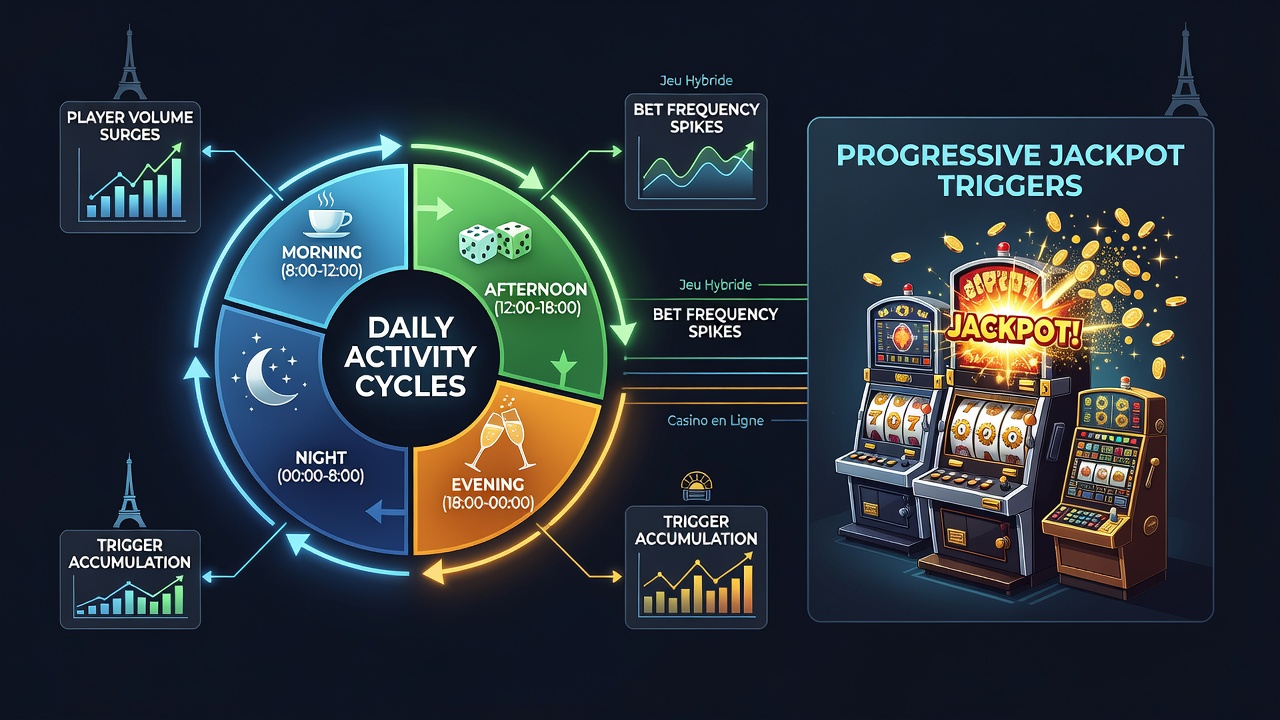
Hybrid mechanics add another layer because lottery components often run on fixed schedules independent of slot volume. When a scheduled draw falls during high-traffic evening windows, the combined effect can accelerate both pool growth and payout likelihood. Technical audits confirm that random number generator outputs remain independent of player count, yet the sheer number of attempts during peaks raises the statistical chance of alignment with jackpot criteria.
Regional and Demographic Influences on Timing
France spans multiple time zones in its overseas territories, and mainland operators see distinct engagement curves from players in different regions. Northern departments show earlier evening peaks compared with southern areas where dinner customs shift later. Demographic breakdowns indicate that younger adults contribute disproportionately to late-night volumes, whereas older participants favor afternoon sessions that produce steadier but smaller contributions to progressive meters.
Industry reports compiled by academic groups at institutions outside France highlight similar daily rhythms in comparable markets, suggesting universal patterns across regulated environments. These external findings reinforce domestic observations without implying causation beyond volume and contribution mechanics.
Operational Adjustments by Operators
Operators monitor real-time dashboards that flag when activity deviates from historical norms for a given hour. During anticipated high-traffic periods, they allocate additional resources to jackpot servers to handle increased transaction rates. Such preparations ensure that every qualifying bet registers instantly and that progressive displays update without delay, maintaining player trust in the system's integrity.
Because hybrid games blend continuous slot play with periodic lottery events, staff also coordinate draw timings with expected activity surges where regulations permit. This coordination does not alter outcome randomness but optimizes the player experience during natural engagement windows.
Conclusion
Daily activity cycles exert measurable influence on progressive jackpot triggers in France's hybrid casino games through their impact on bet volume, contribution rates, and session timing. Platform data from 2026 demonstrates clear alignment between evening peaks and higher trigger frequencies, driven by increased participation rather than any modification to underlying algorithms. Regulatory frameworks maintain transparency around these mechanics, while technical systems adapt to fluctuating loads without compromising fairness. Continued monitoring of these patterns provides operators and researchers with reliable indicators for system performance across varying daily rhythms.